 Digest · Policy News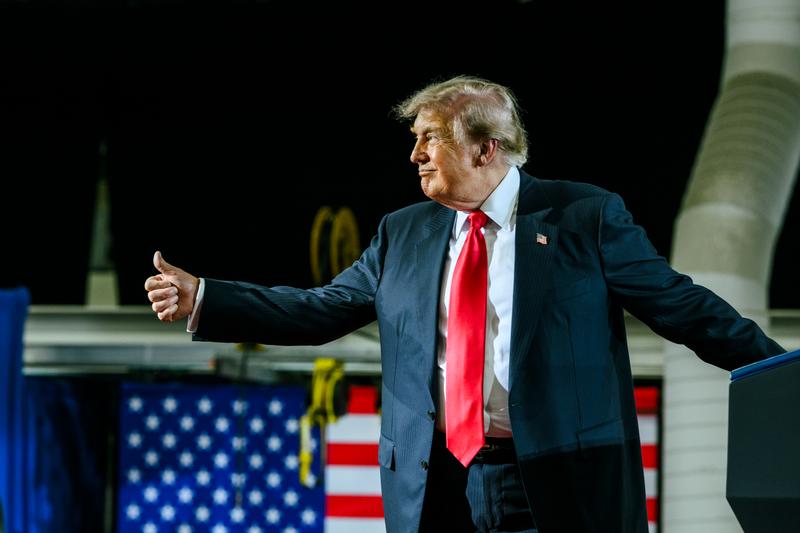
One of the most anticipated days of the year is rapidly approaching for Social Security's more than 71 million traditional beneficiaries (retired workers, workers with disabilities, and survivors of deceased workers). In less than two weeks, on Oct. 14, the U.S. Bureau of Labor Statistics will publish the September inflation report, providing the last puzzle piece needed to reveal Social Security's 2027 cost-of-living adjustment (COLA).
Social Security's COLA is the near-annual raise given to recipients that's intended to offset the inflation they've faced. If benefits didn't account for rising prices, the purchasing power of Social Security income would decline over time. One of President Trump's policies is expected to give Social Security's 2027 COLA an added boost.
Image source: Official White House Photo by Daniel Torok. Based on independent estimates by The Senior Citizens League (TSCL) and Social Security and Medicare policy analyst, Mary Johnson, Social Security's 2027 COLA should be 3.5% and make history on several fronts . A 3.5% raise would tie for the sixth-largest over the last 35 years and would mark the first time in three decades that benefits have increased by at least 2.5% for six consecutive years .
But there are reasons to believe that this final inflation puzzle piece, reported on Oct. 14, will be higher than expected, courtesy of President Donald Trump and the stock market's leading catalyst. The inflationary effects of the Iran war are ramping up, not slowing down Although Trump's policies have been directly affecting consumer prices in a variety of ways, including tariffs, it's the Iran war that's really providing a "Trump bump" for Social Security's 2027 COLA . US Diesel prices hit another record high today at $6.53/gallon, up 74% since the Iran war began.
The damage from skyrocketing diesel prices won’t stop at the pump. Higher freight, farming & shipping costs will ripple through the entire economy, raising consumer prices on almost... pic.twitter.com/d4KU1QDeWx — Charlie Bilello (@charliebilello) September 24, 2026 Shortly after this conflict began on Feb. 28, Iran closed the Strait of Hormuz to most maritime traffic. This action effectively halted the daily flow of approximately 20 million barrels of petroleum liquids, or a fifth of the world's energy demand.
The most front and center impact of the Iran war has been on energy prices. Gas prices soared at the fastest pace in three decades, while diesel prices recently reached an all-time high . Although fuel prices temporarily declined in June and July as U.S.-Iran peace talks ramped up, skyrocketing fuel prices in September could reignite headline inflation and provide a late boost to Social Security's 2027 COLA.
Image source: Getty Images. Otherworldly AI spending is coming home to roost for consumers In addition to a historic Trump bump influencing fuel prices, the stock market's hottest trend, artificial intelligence (AI) , can boost Social Security's 2027 raise above TSCL's and Johnson's current projections of 3.5%. Make no mistake about it, investors are loving every minute of the AI infrastructure build-out.
The insatiable demand for graphics processing units (GPUs), rack servers, storage solutions, and high-bandwidth memory (HBM) has driven AI hardware prices through the roof. That's great news for AI companies and their gross margin, but it's awful news for consumers further down the line . The AI boom is transforming one of the biggest deflationary forces into a key source of US inflation: Import prices for computer and electronic products surged +7.4% in the first 6 months of 2026, to 77.1 points, the highest since January 2016.
This also marks a +8.0% YoY jump,... pic.twitter.com/8k4c01KIgu — The Kobeissi Letter (@KobeissiLetter) July 21, 2026 Every new hyperscaler deal narrows the available supply of GPUs, HBM, servers, and storage solutions. Consumers buying new computers are paying more for memory and storage solutions, while an increase in electricity demand from AI data centers is potentially driving up enterprise and residential electricity bills. Between President Trump's policies and the evolution of AI, the table is set for Social Security's 2027 COLA to leapfrog independent estimates of 3.5%.
Source: The Motley Fool